Surya Engineering · PAN India Manufacturer & Supplier

Mechanical Bolt
Coupler

High-performance Mechanical Bolt Couplers for strong and reliable reinforcement bar connections in RCC construction, bridges, metro rail, tunnels, dams, and infrastructure — no threading or welding required.

Request Bulk Quote →
12–40mm
Rebar Diameter Range
MBT
Mechanical Bolted Type
PAN
India Supply Network
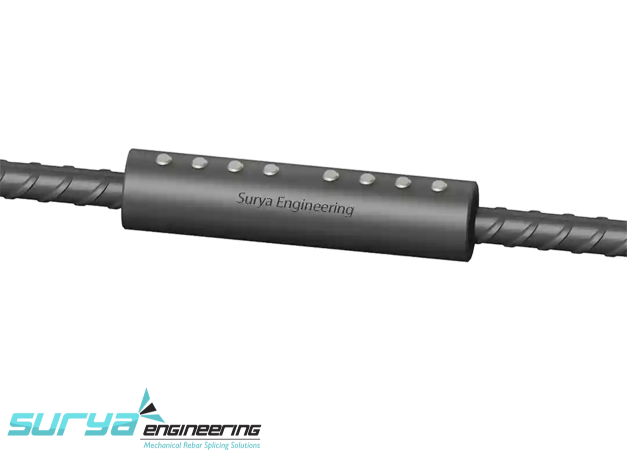
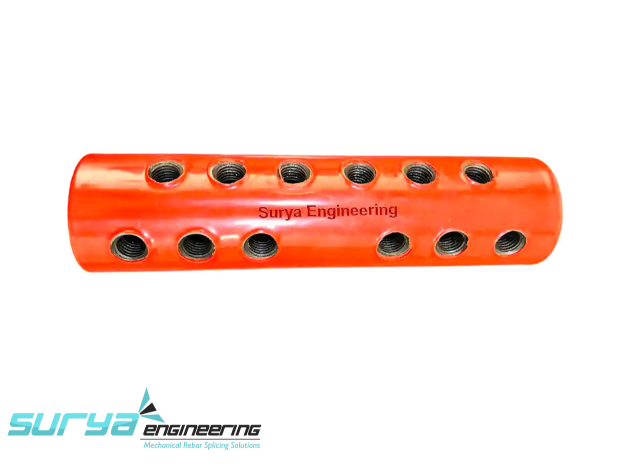
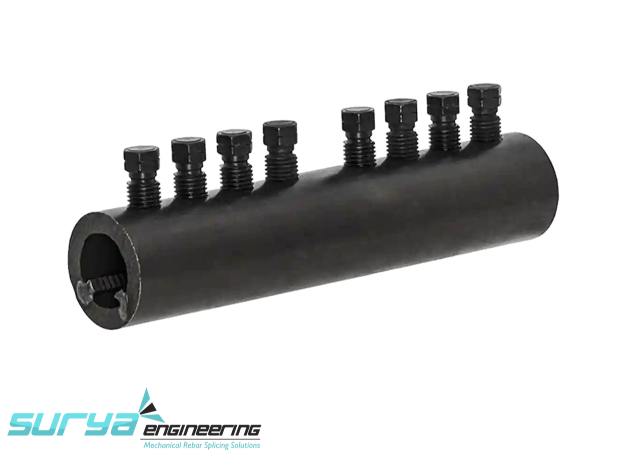
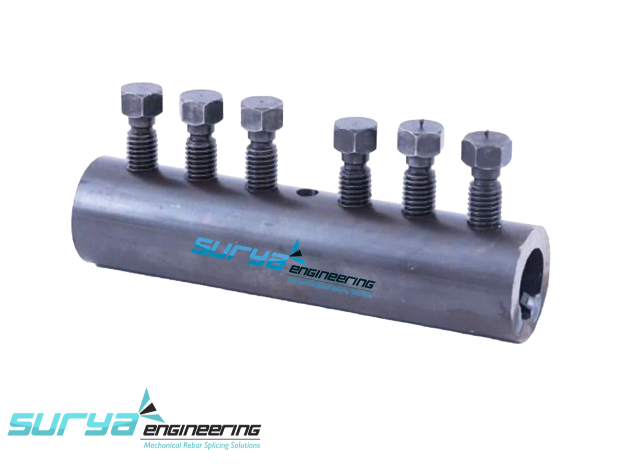
Mechanical Bolt Coupler by Surya Engineering – MBT rebar coupler for RCC construction
🔩 Alloy Steel · No Threading

What is a Mechanical Bolt Coupler?

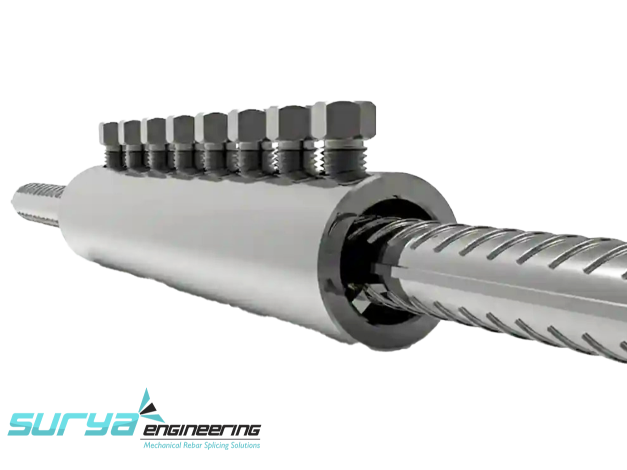
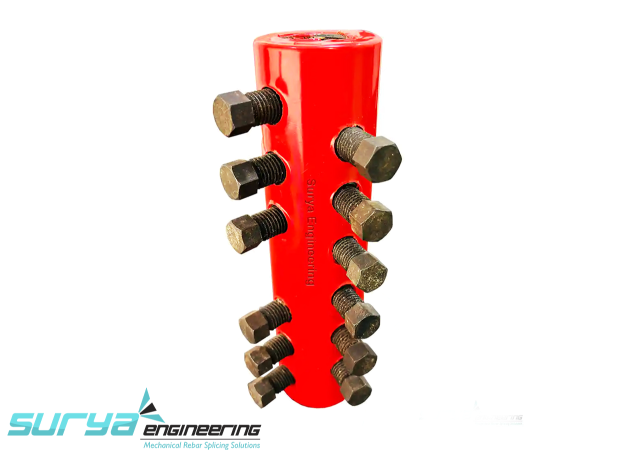
A Mechanical Bolt Coupler is a rebar joining system used to connect two reinforcement steel bars using high-strength locking bolts. The coupler creates a strong mechanical connection by gripping reinforcement bars securely inside the coupler sleeve through controlled bolt tightening.

Unlike traditional joining methods such as lap splicing, welding, or threaded couplers, mechanical bolt couplers do not require rebar threading or welding operations. This makes installation faster, safer, and more practical for difficult construction environments.

Mechanical bolt couplers are also commonly known as:

MBT Coupler (Mechanical Bolted Type Coupler) Mechanical Rebar Coupler Bolted Rebar Coupler Mechanical Reinforcement Coupler

These couplers are widely used in:

🏚️ RCC Construction
🌉 Bridges and Flyovers
🚇 Metro Rail Projects
🚇 Tunnel Construction
💧 Dams and Marine Structures
🏭 Industrial Construction
🛣️ Infrastructure Projects
🔧 Retrofit and Repair Applications

Why Mechanical Bolt Coupler is Used?

Mechanical Bolt Couplers are widely used to improve reinforcement continuity, reduce steel wastage, and simplify rebar joining operations in RCC and infrastructure construction projects.

💪
Maintains Structural Continuity
Mechanical bolt couplers create a direct tensile load transfer connection between reinforcement bars without depending on concrete bond strength.
  • Strong mechanical load transfer
  • Better reinforcement continuity
  • Improved structural performance
  • Reliable tensile strength
♻️
Replaces Traditional Lap Splicing
These couplers reduce the need for long overlap lengths typically required in lap joints.
  • Lower steel consumption
  • Reduced reinforcement congestion
  • Better concrete flow
  • Improved RCC compaction
🔥
No Welding or Threading Required
Mechanical bolt couplers eliminate the need for welding operations and threading machines at construction sites.
  • Faster installation
  • Reduced labor dependency
  • Improved site safety
  • Lower equipment cost
🏗️
Ideal for Congested Reinforcement Areas
These couplers are suitable for locations where rebars cannot rotate or where working space is restricted.
  • Easy installation in confined areas
  • Better reinforcement management
  • Reduced installation complexity
  • Faster project execution
🔧
Suitable for Repair & Retrofit Work
Mechanical bolt couplers are highly effective for connecting existing reinforcement bars in repair and retrofitting applications.
  • Ideal for damaged rebar replacement
  • Suitable for retrofit structures
  • Easy installation on existing bars
  • No rebar movement required

Technical Specifications of Mechanical Bolt Coupler

ParameterSpecification
Product NameMechanical Bolt Coupler
MaterialHigh-Strength Alloy Steel
Rebar Diameter Range12mm to 40mm
Connection TypeMechanical Bolted Locking
Surface FinishZinc Coated / Anti-Corrosion Coating
Bolt TypeHigh Tensile Steel Bolts
Installation MethodTorque Tightening
Tensile StrengthEqual or Greater Than Parent Rebar
UsageRebar Joining
ApplicationRCC & Infrastructure Construction

Types of Mechanical Bolt Couplers

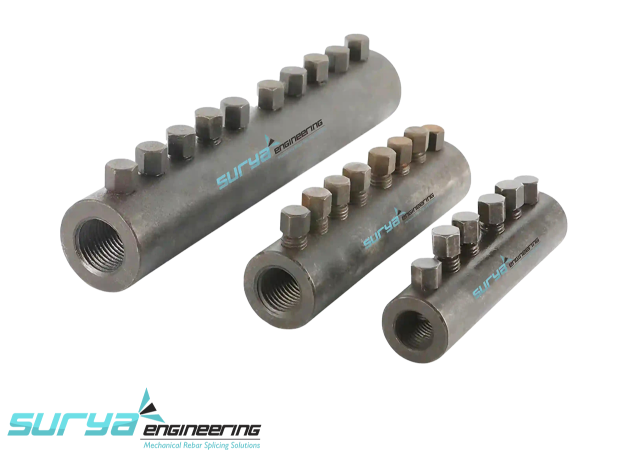
Mechanical Bolt Couplers are available in multiple configurations to suit different rebar sizes, structural requirements, and site conditions.

1. Standard Type
Standard Mechanical Bolt Coupler
Used for connecting rebars of the same diameter in general RCC construction applications.

Applications

  • Residential buildings
  • Commercial construction
  • Industrial RCC structures
2. Transition Type
Transition Mechanical Bolt Coupler
Designed for connecting reinforcement bars of different diameters.

Applications

  • Structural modifications
  • Expansion projects
  • Mixed reinforcement systems
3. Position Type
Position Mechanical Bolt Coupler
Used where reinforcement bars cannot rotate during installation.

Common Applications

  • Beam-column junctions
  • Congested reinforcement areas
  • Restricted access locations
4. Repair Type
Repair Coupler
Specially designed for damaged reinforcement replacement and retrofit applications.

Applications

  • Structural repair work
  • Retrofitting projects
  • Reinforcement replacement
5. Corrosion-Resistant Type
Corrosion-Resistant Mechanical Bolt Coupler
Special coated couplers designed for corrosive and moisture-prone environments.

Applications

  • Coastal construction
  • Marine structures
  • Chemical plants
  • Water treatment facilities

Applications of Mechanical Bolt Coupler

Mechanical Bolt Couplers are widely used across infrastructure, RCC, and industrial construction sectors.

IndustryApplication
Residential ConstructionRCC reinforcement joining
Commercial BuildingsHigh-rise reinforcement systems
Bridge ConstructionHeavy tensile load transfer
Metro Rail ProjectsUnderground reinforcement work
Tunnel ConstructionCongested reinforcement zones
Dams & Marine StructuresCorrosion-resistant applications
Industrial ConstructionHeavy RCC foundations
Infrastructure ProjectsFlyovers, highways, airports

Installation Process of Mechanical Bolt Coupler

Proper installation is important for achieving maximum structural strength and reinforcement continuity.

01
Insert Reinforcement Bar
Insert the first reinforcement bar into the coupler until it reaches the center stop position.
02
Align Second Bar
Insert the second reinforcement bar and ensure proper axial alignment.
03
Tighten Locking Bolts
Use a torque wrench or pneumatic impact wrench to tighten bolts gradually in an alternating pattern.
04
Verify Bolt Locking
Continue tightening until proper locking engagement is achieved.
05
Final Inspection
Proper inspection helps ensure safe and reliable reinforcement performance before concreting.
  • Bolt tightness
  • Rebar alignment
  • Coupler fitment
  • Installation quality

Testing Standards for Mechanical Bolt Coupler

Mechanical Bolt Couplers undergo rigorous testing to ensure tensile strength, dimensional accuracy, fatigue resistance, and long-term structural performance.

🇮🇳
IS 16172:2023
Mechanical Splicing of Reinforcing Bars
🌐
ISO 15835
Mechanical Splices for Reinforcing Bars
🌐
ASTM A1034
Mechanical Splice Testing
🌐
ACI 318
Structural Concrete Requirements
🌐
BS 8110
Structural Use of Concrete
Test TypeObjectiveStandard Reference
Static Tensile TestVerifies tensile strength performanceASTM A1034 / IS 16172
Slip TestMeasures slip resistance and movementISO 15835
Cyclic Tensile TestEvaluates seismic performanceACI 318
Fatigue TestVerifies long-term durabilityASTM A1034
Torque TestChecks locking bolt performanceInternal QC Standard
Go/No-Go Gauge TestVerifies dimensional accuracyPrecision QA Standard
Dimensional Accuracy TestChecks manufacturing tolerancesInternal QA Process

Go/No-Go Gauge Test

The Go/No-Go Gauge Test is one of the most important quality inspection processes for Mechanical Bolt Couplers. This testing is performed to verify dimensional accuracy, fitment precision, and proper mechanical engagement according to specified engineering tolerances.

During testing:

✅ "Go" GaugeMust fit properly within the specified tolerance.
❌ "No-Go" GaugeMust not exceed the permissible dimensional limit.

This testing helps ensure:

  • Accurate coupler dimensions
  • Proper fitment performance
  • Reliable bolt locking
  • Reduced installation failure risk
  • Consistent structural performance
  • Better reinforcement alignment

Go/No-Go Gauge Testing is widely used in RCC construction, metro rail projects, bridge construction, industrial structures, and infrastructure projects where precision reinforcement connections are critical for structural safety.

Advantages of Mechanical Bolt Coupler

🔩
No Threading Required
🔥
No Welding Process
Fast Installation
💪
Strong Mechanical Locking
📉
Reduced Steel Congestion
🌊
Better Concrete Flow
💰
Cost-Effective Solution
⬆️
High Tensile Performance
🔧
Suitable for Retrofit Projects
👷
Improved Construction Safety
🏛️
Long-Term Durability
👥
Reduced Labor Dependency

How Mechanical Bolt Couplers Improve Construction Efficiency

Modern construction projects demand faster execution, reduced labor dependency, and high structural reliability. Mechanical bolt couplers help improve project efficiency by reducing installation complexity and minimizing reinforcement congestion.

Compared to traditional lap splicing systems, mechanical bolt couplers provide:

Factor Lap Splicing Mechanical Bolt Coupler
Steel UsageHighLower
Installation SpeedSlowFast
Welding RequirementSometimesNo
Threading RequirementRequired in some systemsNo
Reinforcement CongestionHighLow
Structural StrengthModerateHigh

These advantages make Mechanical Bolt Couplers highly suitable for modern infrastructure and RCC construction projects.

Why Choose Surya Engineering?

Surya Engineering is a trusted manufacturer and supplier of industrial construction products, reinforcement accessories, and engineering solutions in India. We specialize in durable and high-performance reinforcement connection systems for infrastructure and heavy engineering applications.

⚙️ Precision-Engineered Couplers
🏭 Industrial-Grade Alloy Steel
🔩 High Tensile Bolt Locking System
🛡️ Corrosion-Resistant Finish
📐 Multiple Rebar Size Compatibility
🗺️ PAN India Supply
📦 Bulk Order Fulfillment
🚚 Fast Logistics Support

Industries We Serve

🏚️ RCC Construction
🛣️ Infrastructure Projects
🚇 Metro Rail Projects
🚇 Tunnel Construction
🌉 Bridge Construction
🌉 Flyover Projects
🏭 Industrial Construction
🌊 Marine Structures
💧 Dams & Water Projects
🔧 Retrofitting Projects
🔩 Heavy Engineering

PAN India Industrial Supply & Service Network

Surya Engineering supplies Mechanical Bolt Couplers across major industrial and infrastructure regions of India. Our logistics and distribution network ensures fast delivery and reliable support for industrial and infrastructure projects across India.

🌅 West India
Maharashtra, Gujarat, Goa
🌄 North India
Delhi NCR, Haryana, Punjab, Rajasthan, Uttar Pradesh
🌞 South India
Karnataka, Tamil Nadu, Telangana, Andhra Pradesh
🌿 East India
West Bengal, Bihar, Jharkhand, Odisha, Chhattisgarh
🗺️ Central India
Madhya Pradesh

Frequently Asked Questions

What is a Mechanical Bolt Coupler? +
A Mechanical Bolt Coupler is a mechanical rebar joining system that connects reinforcement bars using high-strength locking bolts without threading or welding.
Does a Mechanical Bolt Coupler require threading? +
No, mechanical bolt couplers do not require threading. Reinforcement bars are directly inserted into the coupler sleeve and secured using locking bolts.
What are the advantages of Mechanical Bolt Couplers? +
Mechanical bolt couplers provide faster installation, reduced steel congestion, strong tensile performance, improved structural continuity, and lower labor dependency.
Where are Mechanical Bolt Couplers used? +
These couplers are widely used in RCC construction, bridges, tunnels, metro projects, dams, industrial structures, and infrastructure applications.
What rebar sizes are supported? +
Mechanical bolt couplers generally support reinforcement bars ranging from 12mm to 40mm depending on project requirements.
Are Mechanical Bolt Couplers suitable for retrofit projects? +
Yes, they are highly suitable for retrofit and repair applications where reinforcement bars cannot rotate or move.
Why is Go/No-Go Gauge Testing important? +
Go/No-Go Gauge Testing helps verify dimensional accuracy, fitment precision, and proper mechanical engagement for reliable structural performance.

Get Heavy Duty Mechanical Bolt Couplers from Surya Engineering

12mm–40mm Rebar Diameter · High-Strength Alloy Steel · No Threading Required · IS 16172:2023 Compliant · PAN India Supply

Request a Quote →