Aluminum formwork, widely known as Mivan shuttering, has revolutionized modern high-rise construction by replacing traditional timber and plywood formwork with high-speed, monolithic concrete pouring. However, the operational efficiency, surface finish, and lifecycle of expensive aluminum panels depend heavily on one crucial material: Mivan shuttering grease (form release agent).
This ultimate guide covers the technical fundamentals, working procedures, economic benefits, and selection criteria for high-performance release agents in aluminum formwork systems.
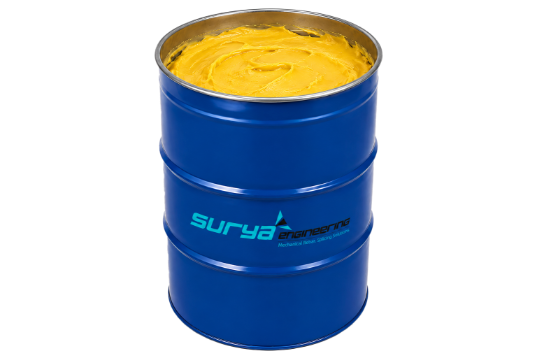
Mivan shuttering grease is a high-performance release agent specifically formulated for aluminium formwork systems. Unlike traditional diesel or waste oil mixtures used on wooden or steel shuttering, this grease is chemically engineered to:
It is typically available in orange, black, yellow, or grey colors, with a PVC coating thickness ranging between 23mm to 25mm on the steel core components. The grease composition includes high-grade lubricants that provide superior slip properties.
Using the right shuttering grease is not optional—it is essential. Here is why:
An aluminum formwork assembly consists of four interconnected categories of modular parts:
| Component Category | Description |
|---|---|
| Aluminium Panels (Walls & Slabs) | The primary surfaces where the grease is applied. |
| Steel Core Pins (8mm to 20mm diameter) | Used to align and lock panels together. |
| T-Plates & Wedges | These connecting elements need grease to prevent jamming and ease removal. |
| Prop Supports & Beam Bolts | Lubrication prevents rust and ensures smooth adjustment. |
The grease protects these accessories from concrete buildup and corrosion, ensuring seamless reusability across multiple construction cycles.
Applying Mivan shuttering grease correctly is as important as using it. Follow these step-by-step procedures for maximum efficiency:
[1. Site Prep] → [2. Panel Assembly] → [3. Reinforcement & MEP] → [4. Grease Application] → [5. Concreting] → [6. Curing & Stripping]
Before any grease is applied, ensure the aluminium panels are cleaned thoroughly. Remove any hardened concrete debris from the previous pour using scrapers or wire brushes.
Layout the wall and slab panels according to the structural drawings. Assemble the panels horizontally on the ground to ensure easy access for application.
Install the steel reinforcement bars (rebars) and embed electrical conduits and plumbing sleeves within the wall cages. Ensure they are secure before proceeding.
This is the most critical step:
Pour the high-grade concrete (typically M30 to M40 grade) into the formwork. Vibrate thoroughly to eliminate air pockets and ensure a dense, monolithic structure.
Once the concrete achieves its initial setting time (usually 12-18 hours), start the de-shuttering process. Because of the quality grease, the panels will release effortlessly, leaving behind a premium, smooth concrete surface ready for curing.
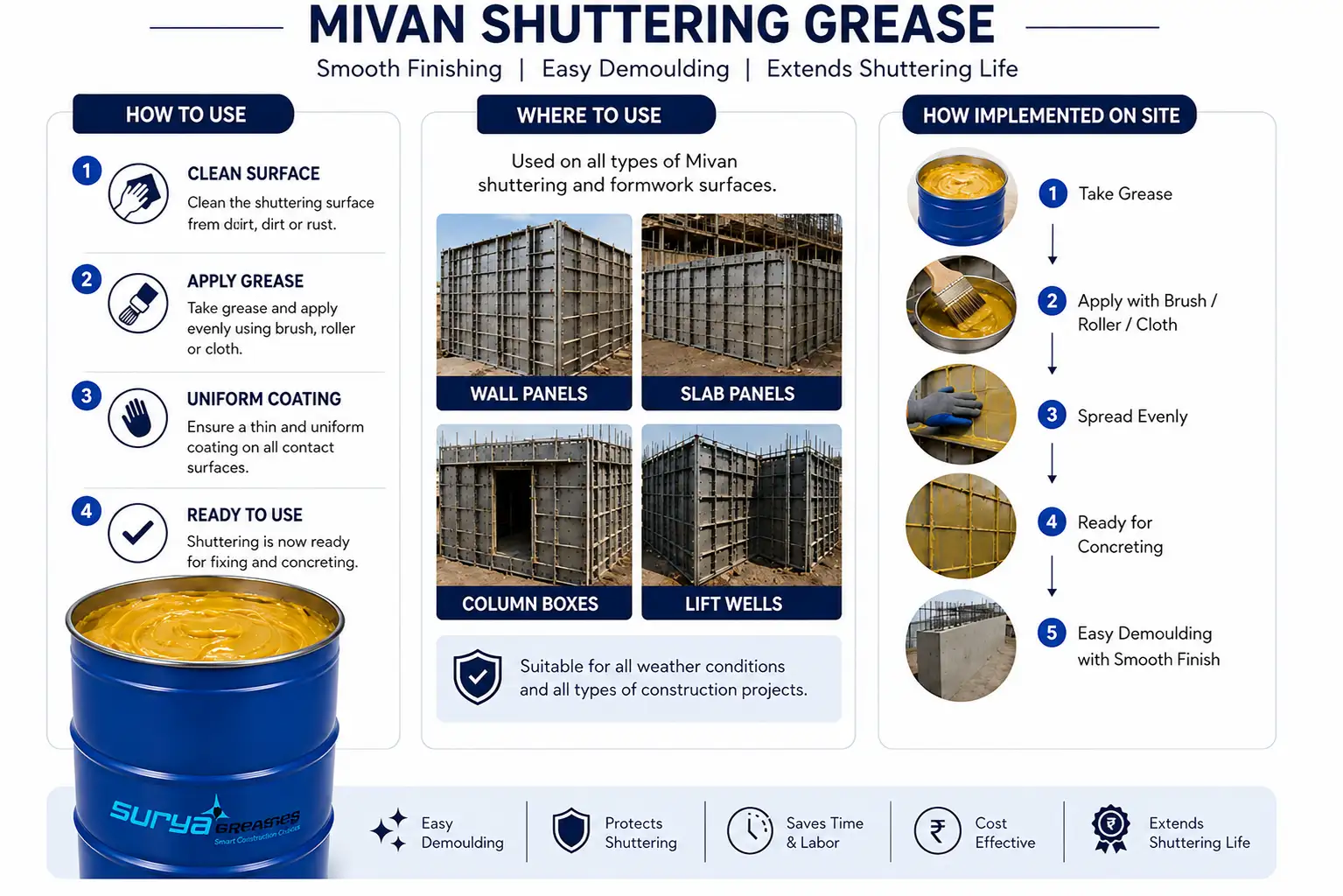
The benefits of using professional-grade shuttering grease extend far beyond just panel release:
While Mivan shuttering grease solves many problems, the system itself has a few limitations:

Mivan technology, paired with premium shuttering grease, is ideal for:
The cost of Mivan shuttering grease and the overall formwork system depends on volume and quality:
| Item | Price Range / Details |
|---|---|
| Mivan Shuttering Grease Price | ₹150 to ₹400 per kg (depends on base oil - mineral vs. synthetic and packaging) |
| Aluminium Formwork Cost | ₹4,500 to ₹6,500 per sq.meter (including panels, props, and accessories) |
| Total Project Cost | 15% to 20% of total construction cost for high-rise buildings |
Note: Using a low-quality grease to save a few rupees can cost crores in panel replacement. Always invest in premium products like those from Surya Engineering.
| Parameter | Mivan Shuttering (Aluminium) | Traditional Formwork (Wood/Steel) |
|---|---|---|
| Material | Aluminium Alloy | Plywood / Steel / Timber |
| Finish Quality | Premium fair-faced, no plastering required. | Rough surface; requires brickwork and plastering. |
| Reusability | Up to 250-300 uses. | Limited to 5-10 uses (plywood) or 50-60 uses (steel). |
| Construction Speed | Very Fast (5-7 days/floor). | Slow (12-15 days/floor). |
| Lubrication Required | Specialized Mivan shuttering grease. | Diesel or waste oil (often harmful). |
| Structural Integrity | Monolithic, seamless walls. | Joints present; risk of misalignment. |
| Labor Required | Less skilled labor needed. | High dependency on carpenters & masons. |
| Cost for High-Rise | Highly cost-effective. | Expensive due to slow turnaround. |
With the growing demand for Mivan technology in India, several lubrication products have flooded the market. However, Surya Engineering stands out as the trusted partner for builders and contractors for several reasons:
Choosing Surya Engineering means choosing reliability, quality, and faster project completion with unmatched surface finishes.
Mivan shuttering grease is the silent hero of modern rapid construction. It is the critical ingredient that transforms a standard aluminium formwork system into a high-efficiency, money-saving, and quality-delivering machine. From enabling monolithic strength to ensuring a premium paint-ready finish, the right grease makes all the difference.
If you are planning a high-rise project or mass housing development, do not compromise on your release agent. Invest in premium solutions like Surya Engineering's Mivan shuttering grease to protect your expensive formwork, reduce labor costs, and deliver flawless results every time.
Ready to upgrade your construction process? Choose quality. Choose performance. Choose Surya Engineering.
A: Mivan Shuttering is an advanced aluminium formwork system used in construction to create monolithic concrete structures. It was developed by a European company and is now widely used in India for mass housing and high-rise buildings due to its speed, accuracy, and superior finish.
A: High-quality aluminium Mivan panels can be reused 250 to 300 times without significant loss of strength or dimensional accuracy, provided they are maintained properly and coated with premium shuttering grease.
A: The major disadvantages include high initial capital cost, design rigidity (no changes after fabrication), reliance on cranes for handling, and the need for trained workforce to apply grease and assemble panels correctly.
A: A T-Plate (or T-shaped connecting pin) is a key accessory used to lock and align the vertical and horizontal aluminium panels together. It works in conjunction with wedges to ensure tight joints.
A: MIVAN is the name of the original Malaysian company that pioneered this specific aluminium formwork technology. It is not an acronym but a brand name; however, it has become a generic term for aluminium formwork systems in India.
A: The thickness of the aluminium panels typically ranges between 23mm to 25mm (with PVC coating). The aluminium extrusion profiles have a standard thickness of about 4mm to 6mm, ensuring high load-bearing capacity.
A: Generally, M30 to M40 grade concrete (or higher) with a slump of about 100-150mm is used for Mivan construction. Self-compacting concrete (SCC) is also often preferred for complex Mivan designs to ensure complete filling without vibration issues.
A: Mivan systems use steel props (adjustable support props) to support the slab panels during the pouring and curing process. They have a steel core diameter ranging from 8mm to 20mm and are lubricated with shuttering grease to prevent jamming.
Leading manufacturers and suppliers have a strong presence across India, with availability in major cities including:
| Region | Cities Covered |
|---|---|
| North India | Delhi, Gurugram, Kota, Udaipur, Patna |
| West India | Mumbai, Pune, Kolhapur, Solapur, Surat, Vadodara, Ahmedabad, Rajkot |
| South India | Bangalore, Hyderabad, Chennai, Mysore, Hubli, Mangalore, Vijayawada, Vizag |
| East India | Kolkata, Raipur, Rourkela |
Contact SURYA Engineering for expert guidance on selecting the right release agent for your aluminium formwork projects.
Get in Touch