Modern concrete floors are designed to carry thousands of tonnes of load, support heavy machinery, and withstand years of industrial operation. Yet, one of the first signs of failure often appears at the smallest part of the floor — the joint. Understanding why joints fail is the first step toward designing concrete floors that truly last.
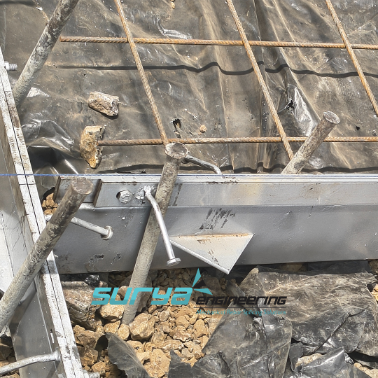
Modern concrete floors are designed to carry thousands of tonnes of load, support heavy machinery, and withstand years of industrial operation. Yet, one of the first signs of failure often appears at the smallest part of the floor — the joint.
A concrete slab may have:
But if joints are not designed to handle movement and traffic forces, the floor can gradually lose performance.
The question is not: "Is the concrete strong enough?"
The real question is: "Can the joint survive the forces acting on it every day?"
Most people notice concrete floor failure only after visible damage appears:
However, the actual failure process begins much earlier. The sequence usually looks like this:
| Stage | What Happens |
|---|---|
| Stage 1 | Joint experiences repeated loading |
| Stage 2 | Small stresses develop around edges |
| Stage 3 | Micro-damage increases with traffic |
| Stage 4 | Concrete starts breaking |
| Stage 5 | Repair becomes necessary |
Joint failure is not a sudden event. It is a gradual process caused by repeated stress.
A common misconception is that joints are defects in concrete. Actually, joints are intentional design features.
Concrete naturally wants to move because of:
| Movement Source | Effect |
|---|---|
| Temperature increase | Expansion |
| Temperature decrease | Contraction |
| Moisture loss | Shrinkage |
| Heavy loading | Stress variation |
Instead of allowing random cracks anywhere, engineers create controlled joint locations.
The challenge is: A joint must allow movement but still transfer loads. This balance determines floor performance.
Every time a forklift crosses a joint, several forces act simultaneously:
The joint must perform two different jobs:
| Requirement | Purpose |
|---|---|
| Allow movement | Prevent stress cracking |
| Transfer load | Maintain slab alignment |
| Protect edges | Prevent damage |
Failure occurs when one of these functions is missing.
Indian construction environments create unique challenges.
Concrete expands during hot conditions and contracts when temperatures reduce. Repeated movement increases stress around joints.
Modern warehouses and factories operate:
Large warehouses require larger concrete panels, increasing joint requirements.
Once joint damage begins, repairing operational facilities becomes expensive.
The concrete edge near a joint is the most vulnerable area. Why? Because it has:
The failure pattern usually develops like this:
| Problem | Result |
|---|---|
| Wheel crosses joint | Impact force develops |
| Edge receives stress | Small cracks form |
| Repeated traffic continues | Concrete chips away |
| Joint widens | Vehicle impact increases |
This condition is known as joint spalling. This is why joint edge protection becomes an important part of industrial floor design, particularly in areas exposed to continuous forklift and vehicle traffic.
Even if the edges remain intact, another problem can develop. Adjacent slabs may start moving differently. This creates:
The solution requires effective load transfer.
This is where engineering systems become important. A concrete joint should not behave like a complete separation. It should allow:
while maintaining:
A proper load transfer system connects slab behaviour without restricting natural movement.
Traditional methods relied mainly on round dowels. Modern industrial flooring increasingly uses diamond-shaped dowel plates because they provide controlled movement with efficient load transfer.
The Diamond Dowel Plate and Sleeve system is designed to help transfer vertical loads between adjacent concrete slabs while allowing the required horizontal movement at the joint.
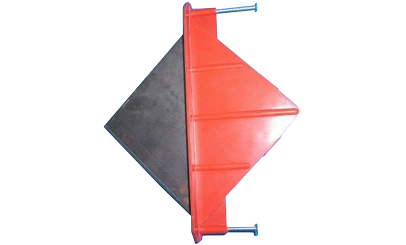
The system works through:
| Component | Function |
|---|---|
| Diamond Plate | Transfers vertical forces |
| Sleeve | Allows horizontal movement |
| Concrete Slabs | Share operational loads |
The result is improved joint performance under repeated traffic.
A joint can transfer loads properly, but the exposed concrete edge can still suffer damage. This creates another requirement: The joint edge itself needs protection.
An effective flooring design therefore needs to consider both load transfer between slabs and protection of the concrete joint edges.
Armour Joint addresses the weakest point of a concrete floor — the joint edge. Instead of allowing vehicles to directly impact concrete, a reinforced steel profile protects the edge.
The Armour Joint system provides reinforced protection at the concrete joint edge, helping reduce damage caused by repeated wheel impact and heavy industrial traffic.
It helps reduce:
A common mistake is solving only one part of the problem. A durable industrial floor requires:
| Challenge | Engineering Solution |
|---|---|
| Edge impact | Armour Joint |
| Slab movement | Diamond Dowel Sleeve |
| Load transfer | Diamond Dowel Plate |
| Joint durability | Combined system |
The combination of joint edge protection and an effective diamond dowel load transfer system helps create a more durable and reliable industrial flooring solution.
A properly designed joint system provides:
| Improvement | Result |
|---|---|
| Better load transfer | Reduced slab movement |
| Edge protection | Less spalling |
| Controlled movement | Lower cracking risk |
| Stronger joints | Longer floor life |
| Reduced repairs | Lower maintenance cost |
These solutions are suitable for environments where floor failure affects productivity:
| Application | Reason |
|---|---|
| Warehouses | Continuous forklift movement |
| Manufacturing plants | Heavy equipment loads |
| Logistics centres | High traffic frequency |
| Parking structures | Repeated vehicle loading |
| Industrial facilities | Long service requirements |
Concrete rarely fails because the material itself is weak. More often, failure occurs because the floor system does not manage:
A successful concrete floor is not just a slab. It is a complete engineered system.
As industrial infrastructure in India continues to grow, concrete floors must handle higher loads and longer operating hours. The focus is shifting from simply constructing concrete slabs to designing complete flooring systems.
The Diamond Dowel Plate and Sleeve system improves the connection and load transfer between adjacent slabs while accommodating controlled movement. Similarly, the Armour Joint system protects the vulnerable concrete joint edges from repeated traffic and impact.
Together, these systems can transform concrete joints from potential weak points into engineered performance zones.
Contact SURYA Machines & Tools for expert guidance on designing concrete floors with proper joint systems.
Get in Touch