Industrial floors are expected to perform for years under demanding conditions. Warehouses, factories, logistics centres, and manufacturing facilities operate with continuous vehicle movement, heavy equipment loads, and repeated impact. Yet many floors begin showing problems much earlier than expected. Understanding why this happens is the first step toward designing durable, long-lasting concrete floors.
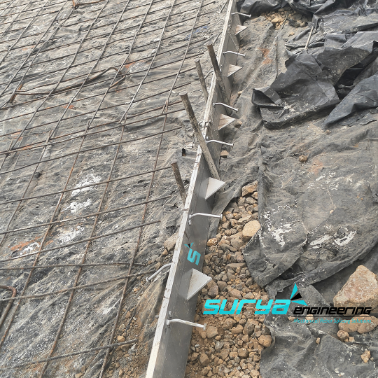
Industrial floors are expected to perform for years under demanding conditions. Warehouses, factories, logistics centres, and manufacturing facilities operate with continuous vehicle movement, heavy equipment loads, and repeated impact.
Yet many floors begin showing problems much earlier than expected:
In many cases, the issue is not the concrete itself. The failure often begins at the joint system.
Concrete floors are complete structural systems where every component contributes to durability:
| Component | Role in Floor Performance |
|---|---|
| Concrete mix | Provides strength and durability |
| Reinforcement | Controls structural behaviour |
| Curing | Improves final concrete performance |
| Joint design | Controls movement |
| Load transfer system | Maintains slab connection |
| Edge protection | Prevents impact damage |
A strong concrete slab with a weak joint design can still experience premature failure.
Concrete is naturally a moving material. Although it appears solid, it continuously responds to environmental and operational conditions.
The main forces affecting concrete floors include:
| Force | Effect on Concrete Floor |
|---|---|
| Temperature change | Expansion and contraction |
| Moisture loss | Drying shrinkage |
| Vehicle movement | Repeated impact loading |
| Heavy equipment | Concentrated stress |
| Daily operations | Continuous wear |
To manage these movements, engineers introduce joints into concrete floors. However, these joints become the most critical areas because they must perform two opposite functions:
Failure occurs when the joint cannot balance both requirements.
Industrial floor damage usually develops gradually. The progression often follows this pattern:
| Stage | Development |
|---|---|
| Initial stage | Small stresses develop around joints |
| Intermediate stage | Minor cracks and edge damage appear |
| Advanced stage | Joint deterioration increases |
| Final stage | Repairs affect operations and productivity |
The visible damage is only the final result of a problem that started much earlier.
The concrete edge around a joint is one of the most vulnerable areas of an industrial floor. Every forklift, pallet truck, or heavy vehicle crossing the joint transfers impact forces directly to this location.
Repeated loading creates:
The damage cycle:
| Action | Result |
|---|---|
| Vehicle crosses joint | Impact force develops |
| Concrete edge absorbs stress | Micro-damage begins |
| Repeated traffic continues | Edge deterioration increases |
| Joint becomes uneven | Maintenance requirement increases |
This problem is especially common in:
A residential or commercial floor and an industrial floor operate under completely different conditions.
| Floor Type | Typical Loading Condition |
|---|---|
| Residential floor | Occasional human movement |
| Commercial floor | Moderate pedestrian and vehicle movement |
| Industrial floor | Continuous heavy traffic and equipment loads |
Industrial floors require additional engineering consideration because they experience:
Standard joint solutions may not provide enough protection for these environments.
A concrete joint separates slabs, but the slabs still need to work together. When a heavy vehicle crosses a joint, the load should transfer from one slab to the next.
Poor load transfer can create:
A proper load transfer system improves:
| Performance Area | Improvement |
|---|---|
| Slab alignment | Reduces uneven movement |
| Joint behaviour | Reduces stress concentration |
| Vehicle movement | Creates smoother transition |
| Floor durability | Improves service life |
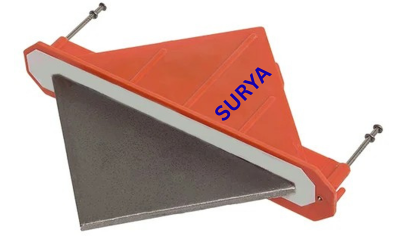
Diamond Dowel Plate and Sleeve systems are designed to improve load transfer between adjacent concrete slabs.
The system uses:
| Component | Purpose |
|---|---|
| Diamond-shaped plate | Transfers vertical loads |
| Sleeve system | Allows controlled horizontal movement |
| Concrete connection | Maintains slab alignment |
Unlike simple connections that may restrict natural movement, the sleeve allows the concrete slab to expand and contract while maintaining load transfer.
The shape of the dowel plate plays an important role in joint performance. Diamond Dowel Plates help by:
This makes them suitable for demanding applications where floor performance is critical.
Improving load transfer alone does not completely solve joint problems. The exposed concrete edge still faces direct impact from vehicle movement.
Without protection, common failures include:
| Problem | Effect |
|---|---|
| Edge breaking | Damaged floor surface |
| Spalling | Loss of concrete around joint |
| Joint deterioration | Increased repair needs |
| Uneven transition | Vehicle impact increases |
This is where joint edge protection becomes essential.
Armour Joint is a heavy-duty concrete joint protection system designed to protect slab edges from repeated impact and traffic loading.
It creates a reinforced edge that improves resistance against:
The system helps maintain joint performance in demanding industrial environments.
These systems solve different challenges:
| Requirement | Solution |
|---|---|
| Protect concrete edges | Armour Joint |
| Transfer loads between slabs | Diamond Dowel Plate |
| Allow controlled movement | Sleeve system |
| Reduce joint deterioration | Combined approach |
A durable industrial floor requires both:
These systems are commonly considered for:
| Application | Reason |
|---|---|
| Warehouses | Continuous forklift traffic |
| Logistics centres | High movement frequency |
| Manufacturing plants | Heavy equipment loads |
| Automobile facilities | Precision floor requirements |
| Parking structures | Repeated vehicle loading |
| Industrial plants | Long operational life requirement |
Repairing damaged industrial floors after failure can lead to:
Preventive design focuses on:
| Design Consideration | Purpose |
|---|---|
| Correct joint planning | Controls movement |
| Proper curing | Improves concrete strength |
| Load transfer system | Reduces slab stress |
| Edge protection | Prevents impact damage |
Warehouse floors commonly fail near joints due to repeated traffic loading, concrete movement, insufficient load transfer, and lack of edge protection.
Forklifts create repeated impact forces when crossing joints, gradually damaging exposed concrete edges.
Proper joint design combined with load transfer systems and edge protection helps improve floor durability.
Diamond Dowel Plate improves load transfer between concrete slabs while allowing controlled movement.
Armour Joint protects concrete joint edges from heavy traffic impact and spalling.
Industrial floor performance depends on more than concrete strength. The real challenge is managing:
A properly engineered joint system transforms a vulnerable area into a durable structural connection. Diamond Dowel Plate and Sleeve systems improve slab performance, while Armour Joint protects the joint edges from operational damage.
Together, they provide a practical solution for warehouses, factories, and industrial facilities where floor durability directly affects productivity and maintenance cost.
Contact SURYA Machines & Tools for expert guidance on preventing industrial floor failure with proper joint system selection.
Get in Touch